Valley of Fire State Park Tour from Las Vegas: Complete Guide (2026)
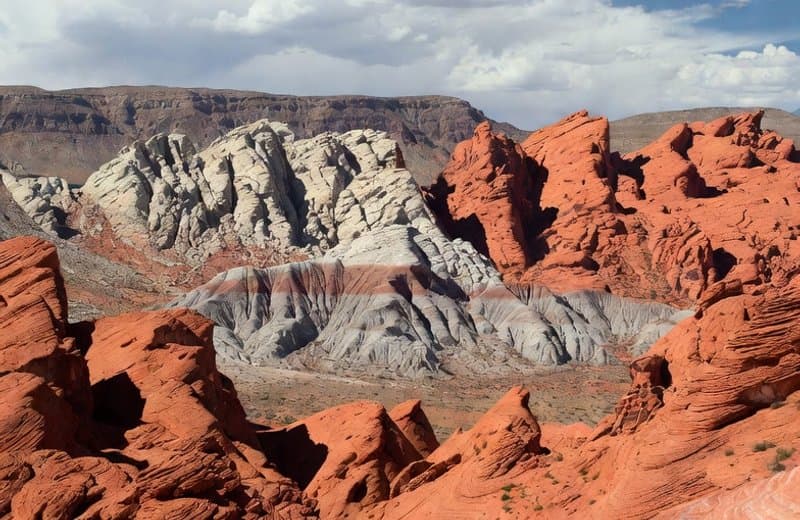
Fifty-five miles northeast of the Las Vegas Strip, the Mojave Desert gives way to something that doesn't look real. Sandstone formations the color of burning coal rise from the valley floor in shapes that defy easy description — beehives, elephant ears, ancient waves frozen mid-curl. The rock glows red in the midday sun and turns deep crimson at golden hour, as if the earth itself is on fire. This is the Valley of Fire State Park — Nevada's oldest, largest, and most visually striking state park, and one of the most undervisited natural wonders in the American Southwest.
Most Las Vegas visitors never make it here. That's their loss — and your opportunity. This guide covers everything you need to know about visiting the Valley of Fire from Las Vegas: what to see, how the tour works, and why the small group format is the smartest way to experience it.
What Is Valley of Fire State Park?
Established in 1935, Valley of Fire is Nevada's oldest state park — and at nearly 46,000 acres, it's also one of the largest. The park takes its name from the red Aztec sandstone formations that dominate the landscape, formed from sand dunes that shifted and compressed over 150 million years during the age of the dinosaurs.
The result is a geological record unlike almost anywhere else on Earth. Layers of red, pink, white, and lavender rock tell the story of ancient seas, shifting continents, and millions of years of erosion. Hidden among the formations are petroglyphs carved by the Ancestral Puebloans — symbols and images left by people who lived in this desert more than 3,000 years ago.
Valley of Fire sits at the southern tip of the Overton Arm of Lake Mead, surrounded by the Muddy Mountains and the Mojave Desert. It's a landscape of extreme contrasts — ancient geology, human history, and an almost surreal visual drama that changes by the hour as the light shifts across the rock.
Why Visit Valley of Fire from Las Vegas?
The practical case is simple: Valley of Fire is 55 miles from the Las Vegas Strip — about an hour by road. It's one of the closest major natural attractions to the city, yet it sees a fraction of the visitors that Grand Canyon or Zion receive. That means fewer crowds, more space, and a more authentic experience of the Nevada desert.
The experiential case is even stronger. No other landscape within day-trip distance of Las Vegas offers this combination — ancient petroglyphs, world-class sandstone formations, a cultural museum, and enough visual variety to fill an entire day of photography. It's not a single viewpoint. It's an entire world.
And unlike driving yourself — which requires navigating desert roads, researching the best stops, and figuring out parking — a guided small-group tour handles all of it. You show up at your hotel, and the day takes care of itself.
How the Valley of Fire Tour Works
This is a small group tour — a maximum of 13 guests per departure. The small group size is not a minor detail. It determines the entire quality of the experience: the pace, the access, the level of attention from your guide, and the difference between feeling like a tourist and feeling like a traveler.
- Duration: 7 hours
- Group size: Maximum 13 people
- Pickup: Hotel pickup and drop-off — 200+ Strip and Fremont Street locations
- Included: Professional driver/guide, bottled water, sodas, fresh fruits, and snacks
- Rating: 5.0 stars · 87 verified reviews
- Cancellation: Free cancellation up to 24 hours before departure
Your guide picks you up at your hotel and handles everything from that moment on — navigation, parking, timing, and the stories behind everything you're seeing. All you need to bring is curiosity and a charged camera.
Full Itinerary: What You'll See and Experience
1. The Beehives
The Beehives are among the most photographed formations in all of Nevada — clusters of rounded red sandstone domes that rise from the desert floor like something sculpted by hand. The name is apt: from the right angle, they look exactly like a cluster of giant hives, stacked and layered, their surfaces worn smooth by millions of years of wind and water.
Up close, the texture is extraordinary. You can see the cross-bedding in the sandstone — the diagonal lines left by ancient wind-blown dunes, now locked into solid rock. The color shifts from pale orange at the base to deep red at the top, depending on the iron content of each layer. It's the kind of geology you can read like a book, once someone explains what you're looking at.
2. Atlatl Rock — Ancient Petroglyphs
Atlatl Rock is one of the most significant archaeological sites in the Valley of Fire — and one of the most accessible. A short staircase leads up the side of a large sandstone formation to a panel of petroglyphs carved by the Ancestral Puebloans, people who lived in this desert between 300 BCE and 1150 CE.
The carvings depict the atlatl — a spear-throwing device used by hunters before the bow and arrow — along with human figures, bighorn sheep, and symbols whose meanings are still interpreted by scholars today. Standing in front of these images, knowing they were carved 2,000 to 3,000 years ago by people who called this desert home, is one of those genuinely humbling travel moments.
Your guide will walk you through the context: who the Ancestral Puebloans were, how they lived in this landscape, and what these particular symbols are believed to represent. It transforms a series of marks in rock into a connection with a civilization that thrived here long before Las Vegas existed.
3. Rainbow Vista & Fire Canyon
Rainbow Vista is where the valley reveals its full color range. The sandstone here is not simply red — it cycles through pink, white, cream, lavender, and deep maroon in bands that follow the ancient geology of the formation. From the overlook, the entire canyon stretches out in a panorama that looks almost too saturated to be real.
Fire Canyon, visible from the same area, is the formation that gave the park its name. In direct sunlight, the canyon walls glow with an intensity that's difficult to describe — as if the rock is lit from within. Photographers know this spot: the light here, particularly in the late morning and at golden hour, produces images that don't require any editing to look extraordinary.
4. The Cabins
Built in the 1930s by the Civilian Conservation Corps — the Depression-era federal program that put unemployed young men to work building infrastructure across America's public lands — the cabins at Valley of Fire are a well-preserved piece of American history. Constructed from the same red sandstone that surrounds them, the cabins blend into the landscape in a way that feels almost inevitable.
They were originally built as shelters for travelers crossing the desert before air conditioning made that journey comfortable. Today, they stand as a reminder of a particular moment in American history: when the country was building its way out of the Great Depression, and when public lands were understood as a resource worth preserving.
5. Elephant Rock
Elephant Rock is exactly what it sounds like — a natural sandstone formation that bears an uncanny resemblance to an elephant, trunk and all. It's one of those geological accidents that stops you in your tracks, because the resemblance is not subtle. The "head" is clearly defined. The "trunk" curves downward at precisely the right angle. It's the kind of formation that makes you wonder how it's physically possible for erosion to produce something so specific.
It's also a great photography stop — accessible by a short walk from the road, framed against the red canyon walls behind it, and distinctive enough to instantly convey where you were when the photo was taken.
6. Lost City Museum
The final stop on the itinerary is perhaps the most culturally significant. The Lost City Museum in Overton, Nevada, was built to preserve the artifacts and history of Pueblo Grande de Nevada — a large Ancestral Puebloan settlement discovered in the early 20th century and subsequently flooded by the creation of Lake Mead in the 1930s.
The museum houses an extraordinary collection of pottery, tools, jewelry, and architectural reconstructions that tell the story of over 10,000 years of human habitation in the Mojave Desert. It's the kind of collection that would be celebrated in any major city — but here it sits quietly in the Nevada desert, 60 miles from Las Vegas, largely unknown to most visitors.
Your guide will contextualize the collection within the broader story of the Southwest — the cultures that came before, the impact of European contact, and what was lost when the rising waters of Lake Mead submerged the original settlement. It's a powerful end to a day that has moved seamlessly between geological wonder and human history.
Small-Group · 7 Hours · Hotel Pickup
Valley of Fire — Small Group Tour from Las Vegas
5.0 stars · 87 reviews · Free cancellation · From $139
Tour Highlights at a Glance
- The Beehives — iconic rounded red sandstone formations
- Atlatl Rock — ancient Ancestral Puebloan petroglyphs
- Rainbow Vista — full panoramic color range of the park
- Fire Canyon — the glowing formation that named the valley
- The Cabins — 1930s Civilian Conservation Corps structures
- Elephant Rock — one of Nevada's most recognizable natural formations
- Lost City Museum — 10,000 years of desert culture
- Maximum 13 guests per departure
- Hotel pickup and drop-off — 200+ Strip and Fremont locations
- Professional licensed driver/guide throughout
- Water, sodas, fruits, and snacks included
- 5.0 stars · 87 verified reviews
- Free cancellation up to 24 hours before departure
Why Choose a Small Group Tour Over Self-Driving?
You could rent a car and drive to Valley of Fire on your own. But consider what that actually involves: navigating from Las Vegas, figuring out the most efficient order of stops, researching the significance of each formation, finding parking at each trailhead, and spending the entire day managing logistics instead of experiencing the place.
With a small group tour, all of that disappears. Your guide has done this route hundreds of times. They know which angle catches the best light at the Beehives, what the petroglyphs at Atlatl Rock actually mean, the full history of the Lost City Museum, and exactly how to pace the day so you see everything without feeling rushed.
The maximum of 13 guests means this is not a bus tour. It's a small group of travelers with a shared interest in seeing something real — guided by someone who genuinely knows the landscape. The difference in experience is significant.
Is the Valley of Fire Tour Worth It?
The question practically answers itself once you see the first photograph of the Beehives. Valley of Fire is one of the most visually dramatic landscapes in the entire American Southwest — and it sits an hour from Las Vegas. The access, the variety, and the combination of natural and cultural history make it one of the most rewarding day trips available from any city in the region.
The small group format adds significant value. For the price, you get hotel pickup, a full day of guided experience at six distinct stops, all transportation, refreshments, and the knowledge of a professional guide who transforms what you're seeing from scenery into story.
Travelers consistently rate this tour 5.0 stars — not because it's a luxury product, but because it delivers exactly what it promises: an expertly guided, unhurried, genuinely memorable day in one of Nevada's most extraordinary places.
What's Included vs. Not Included
Included:
- Hotel pickup and drop-off — 200+ Strip and Fremont Street locations
- Round-trip transportation in air-conditioned vehicle
- Professional licensed driver/guide throughout
- All six stops: Beehives, Atlatl Rock, Rainbow Vista, The Cabins, Elephant Rock, Lost City Museum
- Bottled water, sodas, fresh fruits, and snacks
- Free cancellation up to 24 hours before
Not Included:
- Lunch (bring your own or purchase along the route)
- Personal expenses and souvenirs
- Gratuities (appreciated but not required)
Important Information
- Minimum of 3 participants required for the tour to operate
- Not wheelchair accessible
- Not suitable for pets
- Not recommended for guests with serious back or heart conditions
- Infant seats available upon request — please inform us at booking
- Free cancellation up to 24 hours before departure; no refund within 24 hours
What to Bring
- Comfortable walking shoes — several stops involve short walks on uneven terrain
- Sunscreen and sunglasses — the desert sun reflects intensely off the sandstone
- Extra water — water and sodas are included, but staying hydrated in the Mojave is non-negotiable
- Light jacket — mornings can be cool, especially in spring and fall
- Camera or charged phone — every stop is extraordinarily photogenic
- Snacks or a light lunch — food is not included beyond the provided refreshments
- Cash or card — for personal purchases at the Lost City Museum gift shop
Frequently Asked Questions
Is hotel pickup included?
Yes — door-to-door pickup and drop-off is included from 200+ hotels on the Las Vegas Strip and Fremont Street area. Your exact pickup time will be confirmed the day before departure, between 4:00 PM and 6:00 PM.
Is lunch included?
Water, sodas, fresh fruits, and snacks are included. Lunch is not included — we recommend bringing a light meal or purchasing food at one of the stops en route.
How far is Valley of Fire from Las Vegas?
Valley of Fire State Park is approximately 55 miles northeast of the Las Vegas Strip — about a 1-hour drive depending on traffic. It's one of the closest major natural attractions to Las Vegas and one of the most undervisited.
How many stops does the tour include?
Six: The Beehives, Atlatl Rock (petroglyphs), Rainbow Vista and Fire Canyon, The Cabins, Elephant Rock, and the Lost City Museum. The pace is relaxed — there's time at each stop to explore, photograph, and ask questions.
Is the tour accessible for guests with mobility limitations?
The tour involves moderate walking on uneven desert terrain and is not wheelchair accessible. It is also not recommended for guests with serious back or heart conditions. Contact us before booking if you have specific concerns.
What is the cancellation policy?
Free cancellation up to 24 hours before departure. Cancellations within 24 hours of the tour are non-refundable.
How many people are in the group?
A maximum of 13 guests per departure. This is a small group experience — not a bus tour. The intimate group size means more flexibility, more access, and a significantly better overall experience.
What is the best time of year to visit Valley of Fire?
The park is open year-round. Spring (March–May) and fall (September–November) offer the most comfortable temperatures. Summer can be extremely hot — tours depart early to make the most of cooler morning hours. Winter visits offer spectacular light and very few other visitors.
Is a minimum number of participants required?
Yes — a minimum of 3 participants is required for the tour to operate. If your booking does not meet this minimum, you will be notified in advance and offered a full refund or alternative date.
Ready to See Nevada's Most Spectacular State Park?
Valley of Fire is one of those places that changes how you think about the American Southwest. The geological scale, the ancient human history, the sheer visual intensity of the sandstone — it's a different kind of dramatic than the Grand Canyon or Zion, but no less powerful.
It's also 55 miles from your hotel, with a small-group tour that handles every detail. No rental car. No research. No logistics. Just a full day in one of Nevada's most extraordinary landscapes, guided by someone who knows it inside out.
With a maximum of 13 guests per departure, spots fill quickly — especially in spring and fall. Book early to secure your place.
Las Vegas Day Trip · Small Group · Hotel Pickup Included
Valley of Fire — Small Group Tour from Las Vegas
5.0 stars · 87 reviews · Free cancellation · From $139